
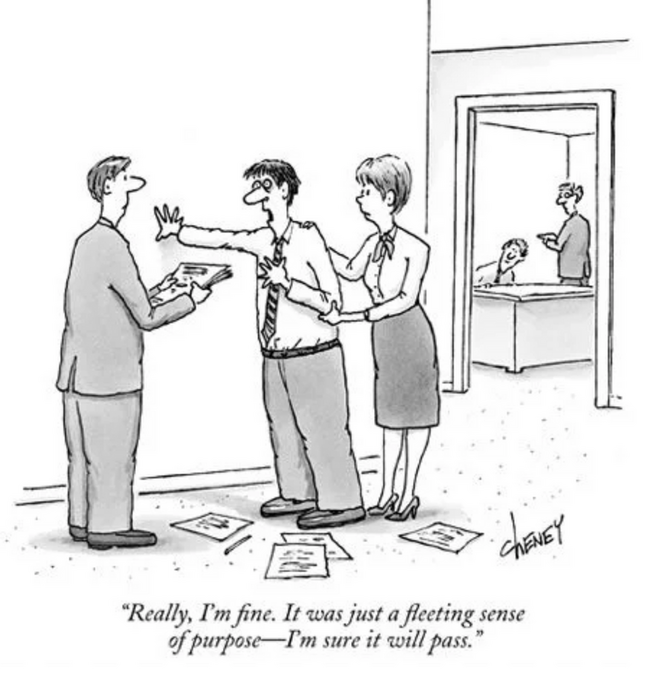
Is it possible to go overboard with de-stressing? Oh, yes. Just look at Englishman Jeremiah Carlton, who in 1720 turned 19, inherited a vast fortune, and decided to spend the rest of his life in bed. He employed servants to give him sponge baths, spoon-feed him meals, and bring him stacks and stacks of books. He spent his days reading and napping until he died, at 89, in his sleep.
Seventy years of hibernation seems a bit much, but I can see the appeal. In these jittery times, who hasn’t been tempted to crawl into bed and pull the covers over their head for the duration? But few of us have the money or the metabolism to become the next Jeremiah Carlton, known for 300 years as the World’s Laziest Man.
On the other hand, I can see the value of — how can I put this? — making an effort to make less of an effort. Giving myself permission to do less. Taking time off from the headlong rush of daily activities.
The Italians call it
il dolce far niente
, the sweetness of doing nothing. They embrace such simple pleasures as sitting in a sidewalk café watching the world go by.
In France, nineteenth-century poets coined the term
flâneur
for the artists and sophisticates strolling about Paris savoring the city as a work of art. To maintain a leisurely pace,
flâneurs
were said to amble about with a pet turtle on a leash. Naysayers have challenged this as
une légende urbaine
(urban legend) but I like to believe it’s true. I know it’s possible; just look at all the oddball pets people take into the streets.
I’d always felt faintly surprised and slightly impoverished that the English language didn’t express an equivalent concept. And then, to my delight, this week my friend and fellow blogger Jackie wrote about
“pootling,”
a 20th century British term that means to move slowly, without any real purpose. It’s a variant of the 1930s verb “to poodle,” a blend of “potter” (to move aimlessly) and “tootle” (to meander). Apparently actual poodles are optional to the practice.
It’s not surprising the term didn’t arise in America, as we do not generally favor such lackadaisical pastimes. Our sports are extreme, our cars are turbocharged, and all our children are expected to be above average. We’re raised on stories of people with extra get-up-and-go who worked hard and prospered mightily: Levi Strauss,
Ariana Huffington,
Joseph Pulitzer,
Isabel Allende, Arnold Schwarzenegger, and so many other immigrants who redefined the upper limits of American exceptionalism.
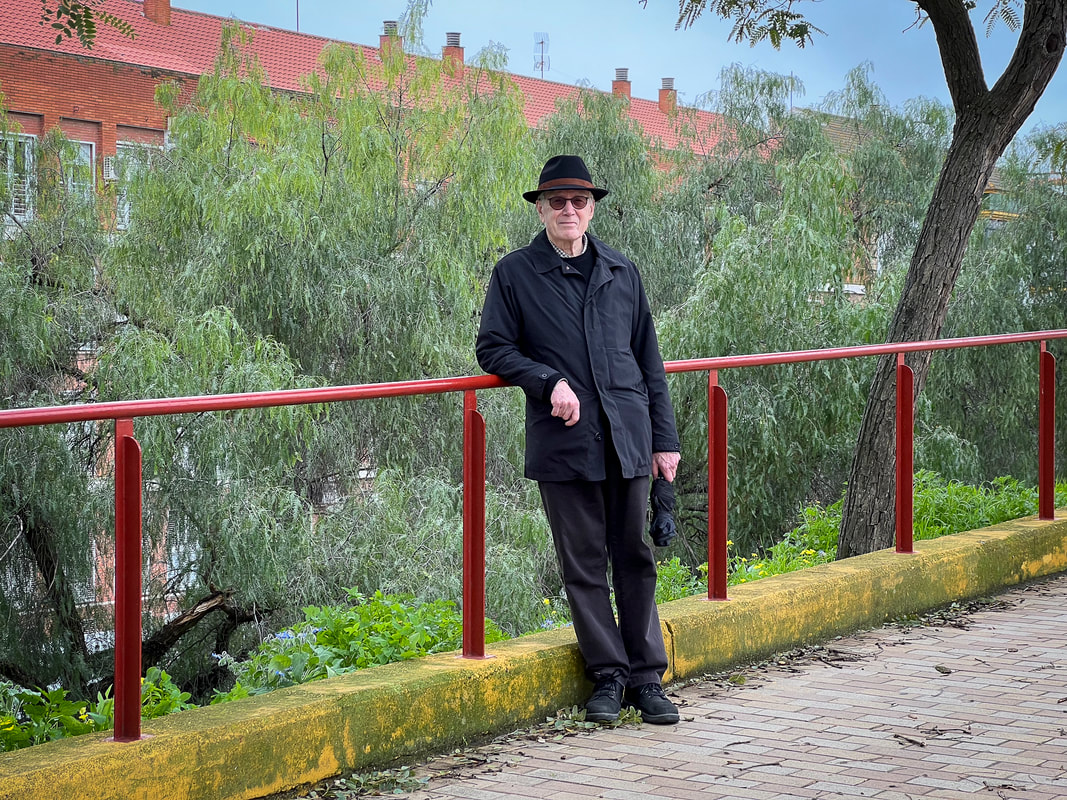
As for us mere mortals, we arrange our lives around more modest goals. One of mine is traveling with a purpose, finding a narrative that gives direction and meaning to my trips, blog posts, and books. Pootling is vital to my process; I have spent countless contented hours moseying up and down back streets and grand boulevards, inviting them to surprise me. They always do.
Of course, I use my common sense. There are plenty of neighborhoods that are best avoided by the savvy traveler. Rich uses an app called
GeoSure
to check the safety ratings of unfamiliar territory. And we keep alert. If we see someone shooting up drugs, directing traffic in the middle of the street with no pants on, or running towards us shouting about the End Times, we remove ourselves from the scene with all due haste.
But on most occasions, we ramble about quite comfortably, enjoying whatever beguiling sights surround us. I particularly like to check out the street art, which gets more wildly creative all the time. I haven’t seen the masterpieces shown below, but they’re on my list.
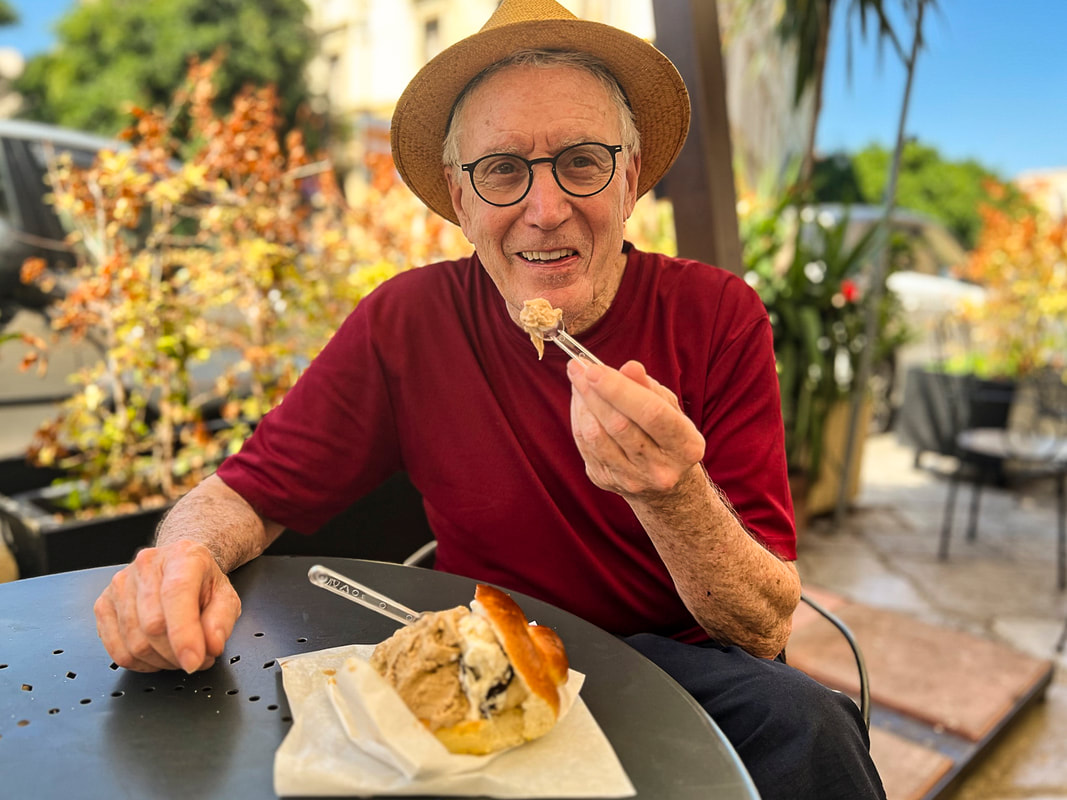
One of the most delightful rewards of footloose rambling is stumbling upon obscure eateries you won’t find on Yelp or TripAdvisor. Here it’s important to use what Rich calls your “sniffer”— a combination of olfactory skills (“Mmmmm, that smells fantastic” is a good start) and your sixth sense about the atmosphere, staff, and patrons.
Occasionally we settle at a table and then have second thoughts. Maybe the prices make us gasp, or we find there’s a fixed menu for a feast that’s beyond the scope of our appetites. I never want to insult the hospitality of our hosts by flinging down the menu and walking out, so I’ve worked out a tactful way to extricate ourselves. I pull out my phone, look at the screen and give a start, as if I’ve received an alarming message. I show the screen to Rich, and we exclaim, “I can’t believe it,” and “Yes, we have to go. What a pity!” We apologize (in sign language, if necessary) and slip out the door.
But most of the time, we stay and take our chances, trusting our sniffers. We’re rarely disappointed.
Last night, after our sniffers had led us to a cozy new wine bar in Seville, Rich and I fell to talking about the meaning of life (wine does that to me) and he brought up one of my all-time favorite quotes. It’s from Joseph Campbell, a scholar who studied the world’s mythology to discover common themes that help us understand what it means to be human. He wrote:
“People say that what we’re all seeking is the meaning of life. I don’t think that’s what we’re really seeking. I think that what we’re seeking is an experience of being alive, so that our life experiences on the purely physical plane will have resonances with our own innermost being and reality, so that we actually feel the rapture of being alive.”
To feel that rapture, to find the alignment between our innermost selves and outer reality, we have to pay attention to the world. And that’s a lot harder if we’re always dashing from one activity to another.
Now, I know what you’re thinking: Do I really want to pay more attention to the world right now? Good point! It’s only February and I’ve already had about as much of 2026 as I can take. I feel, as late night host Jimmy Kimmel put it, like I’m in the movie
Speed
, hurtling along in the back of a bus that’s wired to explode if it slows down.
But we can slow down. In fact, we can get off the bus and wander around in a more congenial environment. For some of us that means relocating to Home 2.0. But wherever we are, it’s about dragging our eyes away from the headlines and turning our attention to the things we find around us.
The Japanese call it
shinrin-yoku
, forest bathing. Indigenous peoples in the Americas head to sweat lodges for revitalizing
temazcal
rituals.
The Spanish luxuriate every day in siestas.
The Norwegians practice
friluftsliv
, embracing nature in all weathers. And now, at last, we English-speakers can indulge in
pootling
whenever and wherever our whimsy takes us.
“Your sacred space,” said Joseph Cambell, “is where you can find yourself again and again.” And luckily for us, there is sacred space all around, just waiting for us to discover it.
HOME 2.0
This is the latest in my series of blog posts exploring what it takes to create a better life for yourself abroad — or at home, for that matter.
See all posts in this series
.
WANT MORE?
To subscribe, send me an email.
[email protected]
SUBSCRIBED BUT NOT GETTING POST ANNOUNCEMENTS?
Check your spam folder
.
If you still can’t find it, please let me know.
GOING SOMEWHERE?
Enter any destination or topic, such as packing light or road food, in
the search box
below
. If I’ve written about it, you’ll find it.
Leave a Reply