I don’t know why I bothered with the twelve grapes and red underwear on New Year’s Eve, because it has now become clear to me that the real luck around here is to be acquired in Córdoba. I’m just back from a long weekend in that city — a mere 75 miles from my Home 2.0 in Seville but light-years ahead of us in terms of opportunities to entice good fortune into our lives. And couldn’t we all use some of that right now?
Naturally, I visited every luck-luring locale mentioned in the old legends. And although it wasn’t even on my wish list, right away I got a delightful little gift from the Universe.
As my regular readers know, I love discovering offbeat words I can play with, words like gobsmacked and cattywampus (so emblematic of our times!) and recombobulated (a state I hope we’ll someday experience collectively). This weekend’s delectable new word is snicket.
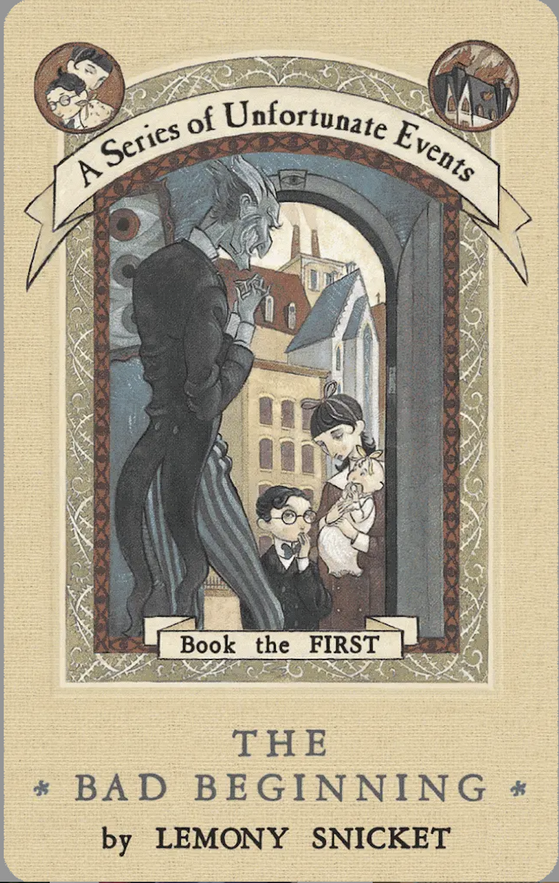
Of course I’m familiar with Lemony Snicket, author of
A Series of Unfortunate Events
, but I always assumed it was a made-up word blending snicker and snippet.
But this weekend, when the term cropped up in the novel
Out of Time
, I learned snicket means a narrow passageway between walls or fences. One online dictionary added helpfully that synonyms include ginnel, vennel, wynd, and twitten. My cup ranneth over, indeed.
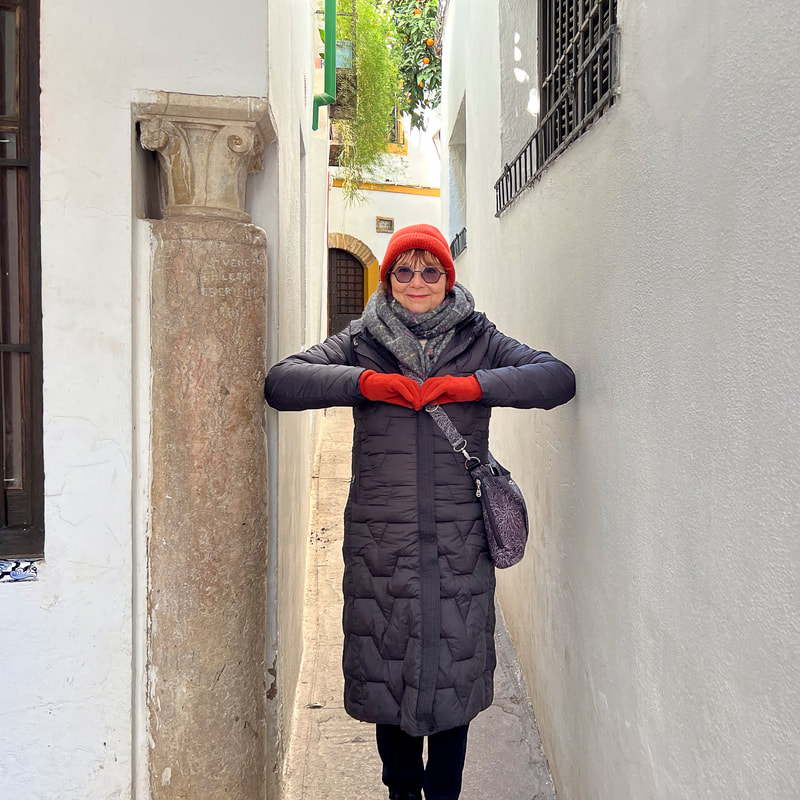
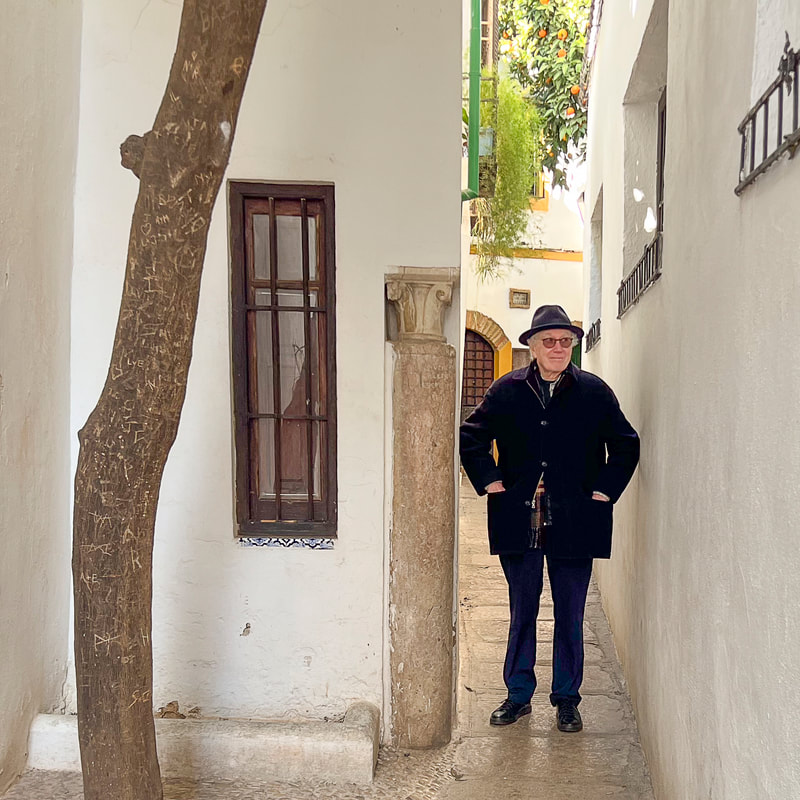
I wasted no time putting my new word to use. “Rich, Córdoba has a snicket I’d like to visit. It’s called the
Calleja Pañuelo
— Handkerchief Alley. That’s how narrow it is.” We found it and discovered the skinniest part was just 20 inches, the width of the traditional cravat that adorned the necks of horseback-riding gentlemen of yesteryear.
Sadly, the oldest good luck source in town vanished millennia ago: Lake of the Tendillas, home of a wish-granting nymph. She was generous to a fault, oldtimers said, but selfish supplicants wanting wickedness would disappear into her waters forever. Today the spot is marked by a fountain, and I like to think she simply retired and downsized to more compact urban lodgings. On the off chance she was still listening, I went to pay my respects and mention a few requests.
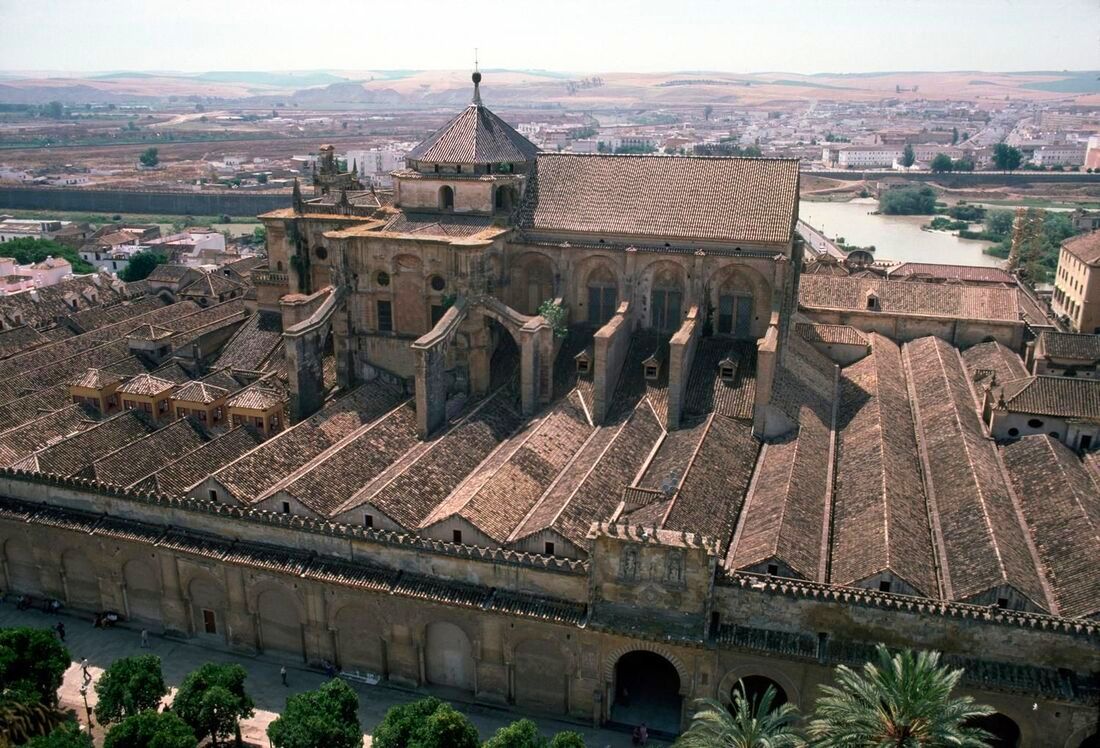
The town’s most famous wishing spot is on the outer wall of its most illustrious building, the
Mezquita.
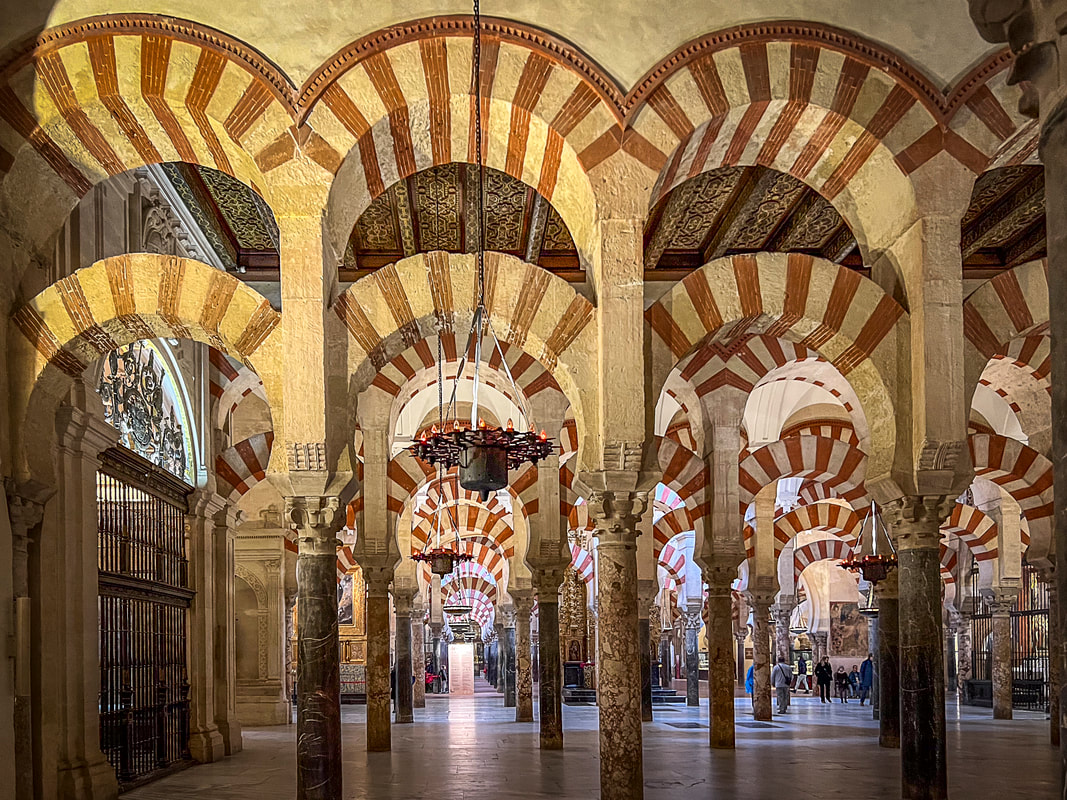
This was the Great Mosque built in 785 when Abd al-Rahman I founded the Islamic Emirate of Córdoba and wanted to create a mosque so magnificent people would talk about it until the end of time. And he succeeded.
The interior was simple perfection, a vast forest of columns that were ancient even then, stretching as far as the eye could see, enlivened with striped arches that were almost playful. Everyone who saw it gasped in wonder.
When the city fell to the Christians in 1236, a chapel was installed but the mosque remained more or less intact. Then in 1528, despite the furious opposition of everyone in Cordoba except the scheming local bishop, King Charles V ordered the center of the
Mezquita
to be hollowed out and turned into a massive Catholic cathedral.
It’s horrifying what treasures some of those ignorant old despots would tear down in order to build a monument to their own ego. (Thank heavens we are far too enlightened to indulge in that kind of barbaric foolishness today.)
Spanish
amigos
told me when Charles V finally saw the cathedral and realized what had been lost, he wept, saying, “They have taken something unique in all the world and destroyed it to build something you can find in any city.”
In our era, a further attempt was made to erase even more of the mosque. Church officials began quietly deleting references to the Moorish past from the site’s literature and signage. When Google Maps changed its designation from Cordoba Mosque to Cordoba Cathedral, that was the last straw. Irate citizens and local authorities raised such a ruckus that Google Maps quickly re-labeled it Cordoba Mosque. When I visited, the Moorish origins featured prominently in all the signage and materials I saw.
Meanwhile, on one of the
Mezquita
‘s outside walls, a section of limestone has crumbled away, revealing the star-shaped fossil of a sea urchin. Naturally (or possibly launched by wily marketing people centuries ago) legends sprang up about this curiosity.
Now viewed as an amulet, the
Estrella de los Deseos
or Star of Wishes, is supposed to make your dreams come true; all you have to do is touch it. As a modern, rational woman I know just how much faith to put in such allegedly lucky charms, but hey, I figured it couldn’t hurt.
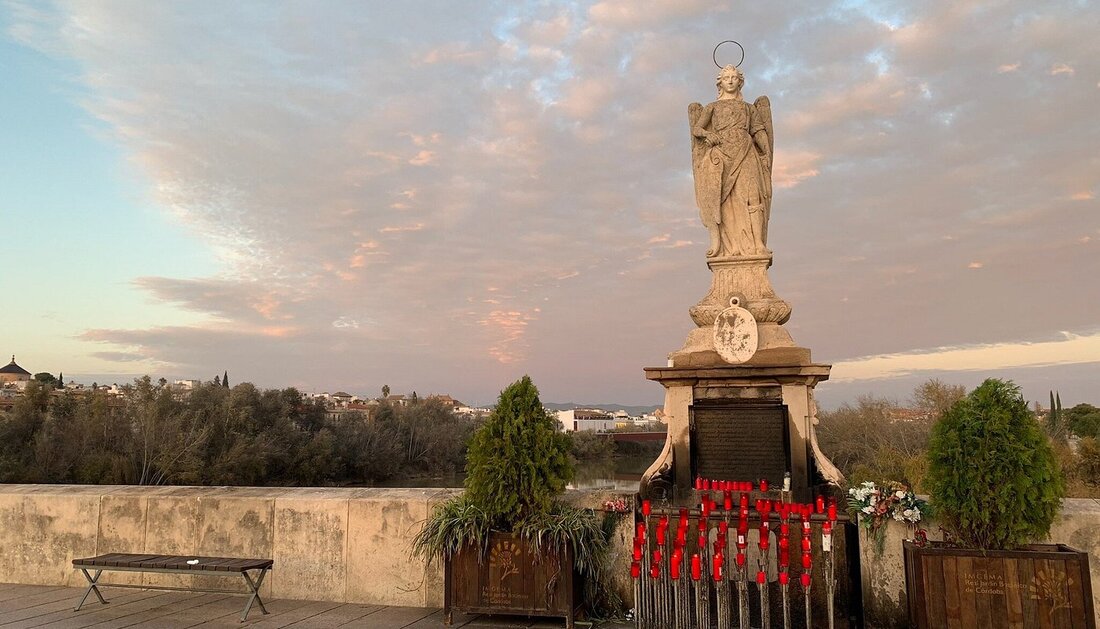
I couldn’t find any record of actual results produced by the Star of Wishes, but nearby, halfway across the old Roman bridge, stands one emblem of good luck with a solid track record: San Rafael. He’s the city’s Guardian Angel, credited with saving the populace from the plague in 1650, and his images, known as “triumphs,” are scattered all over town.
San Rafael is the perfect emblem for Córdoba, because he is honored across Judaism, Christianity, and Islam, religions that famously managed to co-exist peacefully for centuries in “the City of Three Cultures.” Yes, my friends, it is possible.
During the city’s Islamic era (711 to 1031) Córdoba prided itself on being a center of enlightenment and learning, attracting scholars, scientists, philosophers, artists, and architects of every nation and creed. They had this wacky idea that studying the universe, learning how to think logically, and applying human intelligence to solving our most persistent problems might save our bacon someday. And who knows, maybe it will.
Of course, human nature being what it is, there were plenty of egos, biases, and injustices at work, and not everyone flourished in Córdoba. For instance, in the 11th century residents were pressured to convert, causing the Jewish family of ten-year-old Maimonides to leave the city. Living in Morocco, Jerusalem, and Egypt, he picked up a wealth of esoteric knowledge.
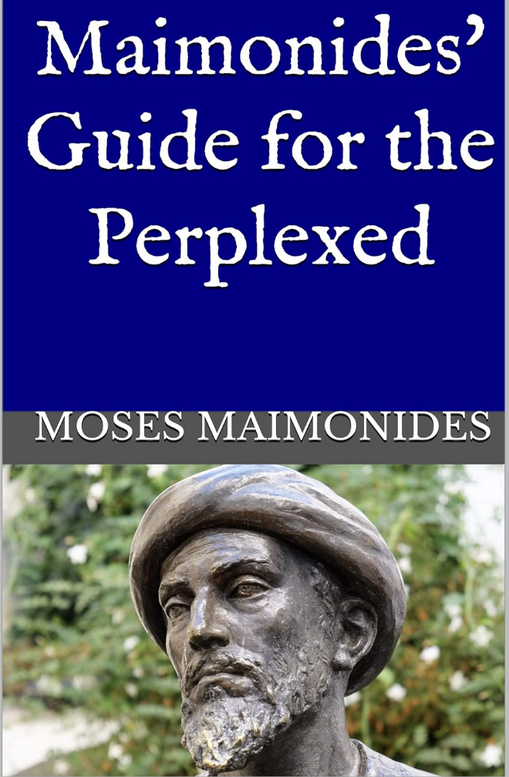
Maimonides
became a rabbi, the most influential Torah scholar of the era, and author of many books including the marvelously titled
Guide for the Perplexed
that seeks common ground for scientific and spiritual principles.
When Córdoba put up a statue to him, it soon became another good-fortune charm, which according to scholars who know such things, would have appalled the ultra-rational Maimonides. Yep, I visited him too.
And what was I asking for, at all these magical places?
Well, I don’t want to risk jinxing things by revealing full details, so I will just say that if you have been at all worried about the state of the world lately, I’ve enlisted the most powerful thinker, angel, nymph, and fossilized sea urchin available, and they’re now working on the case.
You’re welcome.
HOME 2.0
This is the latest in my series of blog posts exploring what it takes to create a better life for yourself abroad — or at home, for that matter.
See all posts in this series
.
WANT MORE?
To subscribe, send me an email.
[email protected]
SUBSCRIBED BUT NOT GETTING POST ANNOUNCEMENTS?
Check your spam folder
.
If you still can’t find it, please let me know.
GOING SOMEWHERE?
Enter any destination or topic, such as packing light or road food, in
the search box
below
. If I’ve written about it, you’ll find it.
Leave a Reply